Safety and Etiquette
Bike Safety & Maintenence
For group rides it is a requirement to ride a well maintained cycle with drop handlebars. We ride two abreast and the wider handlebars of mountain bikes are unsuitable. Read on for more detail on bikes, basic manitenance and what you should bring with you on a group ride.
Before you Leave
Always check your tyre pressure.
The tools you should bring.
Even though we're riding in a group each rider should be self sufficient and will be expected to carry the tools required to fix a puncture as a bare minimum.
Essential Equipment
Multi-tool with the right tools for your bike.
Mobile phone.
Inner tube(s) with the correct valve size for your tyres.
Tyre levers
Pump
Additional items
Chain tool - often included in multi tool.
Chain link (missinglink , connex etc.)
Zip ties
Ten pound note. It's both emergency cash and a boot for a split tyre
Stick on patches
Paracetemol
Antihistamine.
Phone and ID
You should carry a mobile phone with an ICE (In Case of Emergency) number stored in the contacts.
We also recomend a race licence or similar ID with blood type, contact number and any important medical conditions.
Mudguards
During winter (November to March) all bikes should be equipped with mudgards. You must have a full length rear mudguard to join a ride.
The mudguard rule is in place for the benefit of the other riders in your group. A rear mudguard significantly reduces the amount of water, mud, grit, gravel, salt, manure and worse thrown up by your rear wheel and onto your fellow riders. It's not just polite, it's a health issue so make sure you fit a mudguard of the correct length. As a bonus you will stay drier and with full mudguards front and rear your drive chain will stay cleaner and last longer.
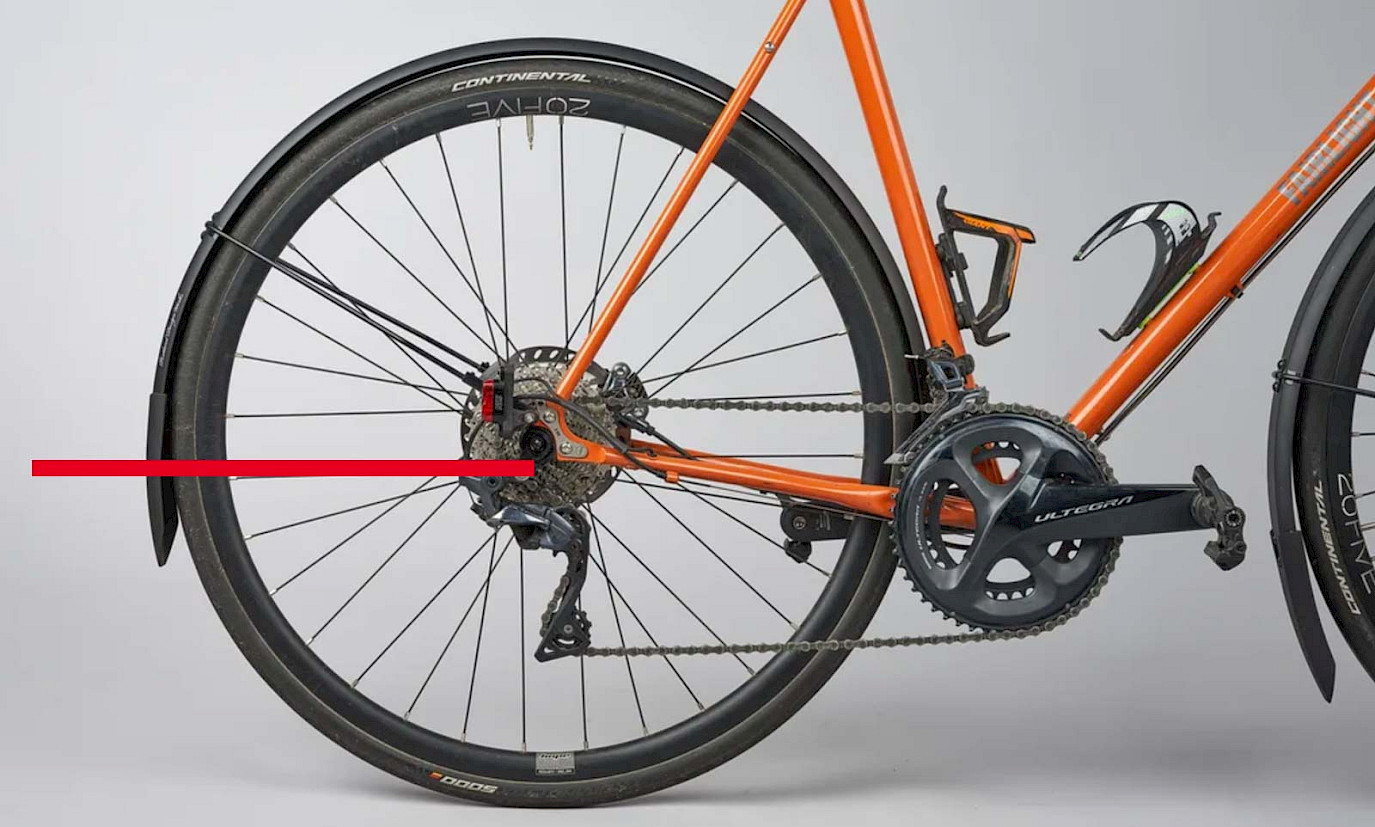
To be effective at keeping the rider behind you dry your mudguard must extend well beyond a line drawn horizontally from your rear axle. Unfortunately many mudguards fail to do this so you may need to fit an additional mud flap; these are cheap to buy and even cheaper to make.